Sunday, May 25, 2025

Potato Gratin (No Cheese)

Adapted from A Passion for Potatoes by Lydie Marshall (HarperCollins, 1992)

You must use some kind of mandolin to slice the potatoes thin enough. I use a Benriner mandolin.

Serves 4 to 6

1 large garlic clove
2 pounds Yukon Gold or russet potatoes, peeled and sliced 1/8 inch thic1½ teaspoons salt
1½ cups half-and-half
1 tablespoon cold butter
1/3 cup heavy cream

Preheat the oven to 325°F. Butter a 2-quart rectangular or oval baking dish (a Pyrex dish works fine). Cut the garlic clove in half and rub it around the inside of the dish.

Peel the potatoes and slice them 1/8 inch thick. Layer the potatoes in the dish, about three overlapping layers deep, lightly sprinkling salt between each layer. Pour the half-and-half over the potatoes, just enough to barely cover them. Dot the top with the butter.

Bake for 45 minutes.

Remove the dish from the oven and pour the heavy cream over the top, tilting the pan to distribute it evenly. Return to the oven and bake for another 45 minutes, or until the top is golden.

Thursday, March 6, 2025

Cocktail - The Last Word

Adapted from Cocktail Codex by Alex Day, Nick Fauchald, and David Kaplan (Ten Speed Press, 2018)

This is a lovely drink with a complex, herbaceous flavor from the green Chartreuse.

The Last Word
Adapted from Cocktail Codex by Alex Day, Nick Fauchald, and David Kaplan (Ten Speed Press, 2018)

For one drink

3/4 ounce gin
3/4 ounce green Chartreuse
3/4 ounce Luxardo Maraschino Liqueur
3/4 ounce freshly squeezed lime juice

Add the gin, Chartreuse, maraschino liqueur, and lime juice to a cocktail shaker filled with ice and shake until cold.

Tuesday, February 18, 2025

Cocktail - Corpse Reviver Number 2

 
Adapted from But Mama Always Put Vodka in Her Sangria by Julia Reed (St. Martin’s Press, 2011)

For one drink

1 ounce Plymouth gin
1 ounce orange liqueur*
1 ounce Lillet Blanc
1 ounce freshly squeezed lemon juice
1/8 teaspoon Pernod
1 Luxardo cherry, for garnish

Shake the first four ingredients in a cocktail shaker filled with ice until very cold. Strain into a coupe glass and garnish with a cherry.

*Regarding orange liqueur: It’s easy to make this more complicated than it needs to be. If you make cocktails at home, you’ve probably already chosen a favorite—Triple Sec, Curaçao, Cointreau, Grand Marnier, and many others. I like Mathilde Orange XO and Pierre Ferrand Dry Curaçao, both made by the same house. One (Mathilde) is sweeter than the other. I usually use Mathilde XO.

Friday, February 14, 2025

Cocktail - Thyme 75

Adapted from The Comfortable Kitchen by Alex Snodgrass (Harper Wave, 2021) and Cocktail Codex by Alex Day, Nick Fauchald, and David Kaplan (Ten Speed Press, 2018)

This is a festive, herb-infused take on the French 75, made with a thyme simple syrup that complements the botanical notes of gin and sparkling wine. 

For one drink

1 ounce Plymouth Gin
1/2 ounce lemon juice
1/2 ounce Thyme Simple Syrup*
4 ounces cold dry sparkling wine (Prosecco, Cava, or Champagne)
1 thyme sprig, for garnish

Shake the gin, lemon juice, and thyme syrup with ice. Strain into a flute or coupe, then top with sparkling wine. Stir gently with a bar spoon to mix. Garnish with a sprig of thyme.

Thyme Simple Syrup

250g filtered water
250g white sugar
10 to 12 sprigs fresh thyme

Heat the water in a small saucepan just until steaming, not boiling. Add the sugar and stir until fully dissolved. Remove from the heat, add the thyme sprigs, and let steep until the syrup cools to room temperature. Discard the thyme before using.

Alex Snodgrass notes that this syrup will keep in the refrigerator for up to two weeks—so it's smart to make it ahead (just not too far ahead).

Note: Plain simple syrup (without added herbs or aromatics) can be stored in a sealed jar in the refrigerator for 2 to 3 weeks.

Thursday, February 13, 2025

Cocktail - The Negroni

Adapted from Gabrielle Hamilton and Cocktail Codex by Alex Day, Nick Fauchald, and David Kaplan (Ten Speed Press, 2018)

Serves 1

1 ounce Plymouth Gin
1 ounce sweet vermouth*
1 ounce Campari
A half wheel of orange, for garnish

Shake or stir the ingredients together and either strain into an old-fashioned glass over ice or go rogue and serve it straight up, which is the way I like it. Garnish with the half wheel of orange.

*About the sweet vermouth:

Gabrielle Hamilton told The New York Times that in New York she uses Noilly Prat—unless she’s having a second one, in which case she switches to Carpano Antica, “because it’s softer, mellower, with a slight vanilla taste.” In Italy, she drinks her Negronis with Cinzano or Martini "because they are sold most prevalently."

The Cocktail Codex boys, without hesitation, recommend Carpano Antica. I think it’s delicious in a Manhattan, but for a Negroni I usually use Martini.

Cocktail - The Fresh Gimlet

Adapted from Cocktail Codex by Alex Day, Nick Fauchald, and David Kaplan (Ten Speed Press, 2018)
Serves 1

2 ounces Plymouth Gin
1 ounce fresh lime juice
¾ ounce simple syrup*
1 lime wedge, for garnish

Shake all the ingredients together, then strain into a coupe. Garnish with the lime wedge.

*Simple syrup:
From The Kitchn.
Simple syrup is equal parts sugar and water.

250g filtered water
250g white sugar

Heat the water by itself, but do not bring it to a boil. Add the sugar and stir until fully dissolved. Cool completely and store in a jar in the refrigerator. Keeps for 2 to 3 weeks.

I make a fresh gimlet because I no longer use Rose’s Lime Juice, which comes in a plastic bottle and contains high-fructose corn syrup and dye—things I avoid.

Wednesday, February 12, 2025

Cocktail Notes

Some Basics to Start
The two cocktail books I turn to most often are The Cocktail Codex by Alex Day, Nick Fauchald, and David Kaplan, and The Book of Cocktail Ratios by Michael Ruhlman. I also owe a big hat tip to John Maddox, who really fueled my interest in cocktails.

Simple Syrup
Adapted from The Kitchn

Simple syrup is equal parts sugar and water.

250g filtered water
250g white sugar

Heat the water by itself, but do not bring it to a boil. Add the sugar and stir until it dissolves completely. Cool and store in a jar in the refrigerator for 2 to 3 weeks.

Orange Liqueur
It's easy to make this harder than it needs to be. If you make cocktails at home, you’ve probably already figured out which orange liqueur you like best—Triple Sec, Curaçao, Cointreau (a brand of Triple Sec), Grand Marnier (not exactly, but similar to Curaçao), and plenty of others. If you want a deep dive, Serious Eats has an excellent guide.

I personally prefer Mathilde Orange XO, which has a hint of sweetness. Pierre Ferrand Dry Curaçao—beloved by many—is quite dry.

A few other ground rules
All citrus juice is fresh.
Only use Luxardo cherries. It’s worth going for broke here. (And remember: the spoon will have delicious syrup on it. Dip it into some lucky person’s drink.)

Thursday, November 14, 2024

Jeremy's Black Beans


Adapted from the chapter “Beans and Me” by Jeremy Jackson in Alone in the Kitchen with an Eggplant, edited by Jenni Ferrari-Adler (Riverhead Books, 2007)

Note: Jeremy Jackson serves these over cornbread, which I’m sure is delicious, but I serve them over rice. This is especially nice with pork chops or crisply roasted chicken. Sometimes I add a spoonful of guacamole on the side as a condiment.

1 tablespoon olive oil
1 small white onion, chopped
1 clove garlic, minced
1 15-ounce can of black beans, with their liquid
Salt and pepper
Sour cream, for serving (optional)

Heat the olive oil over medium heat in a 2-quart saucepan. Add the onion and cook until it begins to brown. Add the garlic and cook for one minute more, stirring, and being careful not to let it burn.

Add the beans with all their liquid, stir, and lower the heat. Simmer for about 20 minutes, stirring occasionally so the beans don’t stick to the bottom of the pan. The liquid will thicken slightly.

Guacamole

Adapted from Truly Mexican by Roberto Santibañez (Wiley, 2011)

Serves 2–3. This recipe can be easily doubled. Serve with chips, as a dip, or use as a condiment with a meal.

For the best flavor and texture, make this as close to serving time as possible. If you need to prepare it a little in advance, press cling film directly against the surface of the guacamole to keep air out. The lime juice helps too, but exposure to oxygen is what turns guacamole brown—so minimize it where you can.

1 ripe but not mushy Hass avocado (the pebbly black kind)
2 tablespoons finely chopped white onion
1 tablespoon chopped fresh cilantro (optional—if it doesn’t taste like soap to you)
4 shakes Tabasco Original Red
6 shakes Tabasco Green (jalapeño)
Maldon sea salt, to taste, crushed between your fingers
Juice of half a fresh lime
Optional: chopped fresh jalapeño (you can include seeds for added heat)

Cut the avocado in half, remove the pit, and scoop the flesh into a bowl using a tablespoon. Mash it with a small masher, leaving some texture. Add the remaining ingredients and mix with a spoon. Taste and adjust with more Tabasco, cilantro, lime, or salt, as you like.


Saturday, October 26, 2024

Hungarian Stuffed Green Peppers

Adapted from The Hungarian Cookbook by Susan Derecskey (Harper & Row, 1972)

Serves 6

6 green bell peppers
Salt
1/4 cup rice (I use basmati because that’s what I always have on hand.)
1 egg, lightly beaten
A pinch of pepper
1 pound chopped meat, either beef or pork (I always use beef.)
1/4 teaspoon dried marjoram, crushed between your fingers as you add it
1 tablespoon chopped fresh parsley
1 whole onion, cut in half and peeled (cutting it in half makes it easier to grate)
1 clove garlic
About 3 cups tomato sauce*
Steamed or boiled potatoes, for serving

*I don’t buy canned tomato sauce—I buy cans of Italian cherry tomatoes and put them through a food mill, but you can use canned tomato sauce for this.

Wash the peppers, cut off the tops, and core them carefully, trying not to puncture the bottoms. Parboil the peppers in plenty of salted boiling water for 5 minutes. This softens them and helps remove any bitterness.

Parboil the rice for 10 minutes.

In a large bowl, beat the egg with a pinch of pepper. Add the chopped meat, a little salt (no more than 1/2 teaspoon), the parboiled rice, marjoram, and parsley.

Using a Microplane Ribbon Grater, grate a quarter to a half of the onion (depending on its size) directly into the bowl. If you don’t have this grater, finely mince the onion—but the grater really makes a difference here because it gives you both the pulp and the juice, which helps bind and flavor the mixture.

Grate the garlic on a rasp-style Microplane—do not mince it. If you don’t have a rasp-style grater, it’s better to leave the garlic out than to substitute minced garlic.

Lightly mix everything with your hands—don’t overwork the meat. Stuff the peppers with the meat mixture, loosely. Do not pack it in, and do not fill them all the way to the top.

Place the peppers upright in a baking dish, pour the tomato sauce around them, and bake in a 325°F oven for 1 hour.

I serve this with steamed (not boiled) potatoes and often a cucumber and sour cream salad alongside.

Note 1: This is one of those recipes where the Microplane Medium Ribbon Grater really shines. It lets you grate the onion back and forth so that both the pulp and the juice go straight into the meat mixture. The flavor of onion is there, but you don’t get little perceptible bits of it in the meat. (I do this when I make meatballs too.)

Note 2: I use a standard rasp-style Microplane for the garlic. In this recipe, the garlic must be grated—not minced. (This works beautifully in meatballs as well.)

Left is a Microplane Medium Ribbon; Right is a Microplane Rasp


Tuesday, June 25, 2024

Ruth Rogers’ Favorite Tomato Sauce

Adapted from Marcella’s Italian Kitchen by Marcella Hazan (Alfred A. Knopf, 1986), via The Guardian (January 29, 2006)

Serves 2 to 4 (for about 6 to 8 ounces of pasta)

Marcella Hazan notes that the character of this simple tomato sauce depends largely on how the garlic is handled. It should be sliced very thinly, sautéed only until it turns a pale gold, then allowed to simmer slowly in the tomatoes so it releases its sweetness. Basil is added off the heat at the end, where it gives a fresh, fragrant lift and should not be cooked. The sauce can be made several hours in advance; reheat gently, then add the basil just before serving. Marcella suggests spaghetti, spaghettini, fusilli, penne, rigatoni, or ziti.

¼ cup extra virgin olive oil
2 medium garlic cloves, peeled and sliced very thinly
400 g (14 ounces) tinned Italian peeled plum tomatoes, cut into large pieces, with their juice (if possible, use tomatoes from Italy)
Salt, to taste
Black pepper, freshly ground
10 fresh basil leaves, torn by hand into small pieces
(I don’t use any grated cheese with this sauce, but of course you can)

Put the oil and garlic in a saucepan and set over medium heat. When the garlic turns a pale gold, reduce the heat to very low and add the tomatoes. Cook, uncovered, until the oil floats free of the tomatoes, about 20 minutes. Add salt and a few grindings of pepper, then cook for another two to three minutes, stirring from time to time. Off the heat, stir in the torn basil leaves. Serve with your choice of pasta.

Note: Ruth Rogers chose this as her favorite recipe in The Guardian’s “Top Foodies Choose Their Favorite Recipes of All Time,” saying it’s the dish she often makes when guests come for dinner. Her version uses slightly different proportions; I’ve adjusted them here to suit my taste.


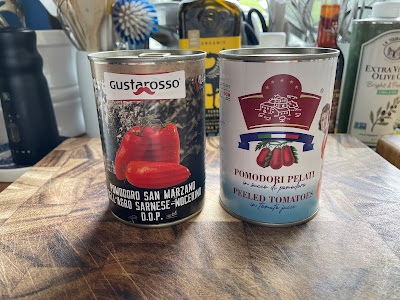
Italian Tomatoes from Gustiamo


Monday, April 22, 2024

Soft-Boiled Eggs

Adapted from Cook’s Illustrated, January/February 2013
Serves 1 to 4

1 to 4 large eggs, cold from the refrigerator

Caution: I love soft-boiled eggs. I mean I LOVE SOFT-BOILED EGGS. But recent information about avian flu suggests it may be risky to eat soft egg yolks. I get many of my eggs from local farmers, and I have a cat who would be susceptible if I caught the flu and passed it along. If you decide you’d rather avoid soft yolks, you might like to see how I make hard-boiled eggs instead.

Put 1 inch of water in a saucepan and bring to a boil over medium-high heat. Carefully place the egg or eggs in the pan and cover. (If you’re making more than one egg, you may want to put a steamer basket in the saucepan. This keeps them a little steadier and stops them knocking into each other.) Immediately reduce the heat slightly, and cook for exactly 7 minutes. I use a digital timer to get this right. If the egg is cooked more than you like, reduce the time slightly to find your perfect yolk.

When the time is up, remove the cover, place the pan in the sink, and run cold water into it for 30 seconds to stop the cooking. Remove the eggs and eat them however you prefer.

My favorite way is the one I grew up with at my grandfather’s house in England—in an egg cup with toast soldiers, strips of buttered toast for dipping into the soft yolk. I put a little mound of salt and pepper on my plate to dip the spoon into between bites. I use an egg topper to remove the top, but you can tap the egg all over with a knife and then lift off the top.

If you want your egg smashed onto buttered toast, crack the egg in half over a plate and scoop it onto the toast with a spoon.

Note: After many trials, this is my preferred method for soft-boiled eggs. Calling them “boiled” is a bit misleading—they’re really steamed.


Egg Toppers

Tuesday, February 13, 2024

Homemade Ricotta

Adapted from The Food Lab by J. Kenji López-Alt (W. W. Norton, 2015)

Makes about 1½ cups

To make this recipe, you need an instant-read thermometer. I make this in an 8-cup Pyrex measuring cup; you can certainly use any microwave-safe 2-quart container.

2 cups whole milk
2 cups heavy cream
½ teaspoon kosher salt or fine Italian sea salt
¼ cup distilled white vinegar (must be 5% acid)

Pour the milk and cream into an 8-cup Pyrex measuring cup, which is what I use, or another microwave-safe 2-quart container. Stir in the salt and vinegar.

Microwave until the mixture reaches 165°F on an instant-read thermometer. In my small microwave, this takes about 8 minutes. Stir gently for about 5 seconds—the curds should already be forming and separating from the whey.

Pour into a fine sieve lined with a white mesh vegetable bag or cheesecloth. Cover with plastic wrap and let drain until it reaches your desired consistency. The longer it drains, the drier the ricotta will be.

I like the texture when it’s almost like ice cream. Since I usually use this ricotta to make manicotti, it gets thinner with the addition of eggs (and a little heavy cream), so this starting texture is perfect for me.

Kenji also gives a stovetop variation in The Food Lab: heat the mixture in a saucepan over medium heat until it reaches 165°F, then stir gently and let it sit for about 2 minutes before draining. I haven’t tried it myself, but since his recipes are always reliable, you might want to give it a try if you don’t use a microwave.

My Ricotta

Sunday, February 4, 2024

Vic's Chicken

Serves as many as you like

This is easily adaptable to the number of people you’re serving; use as many pieces of chicken as you need.

I don’t recommend chicken breasts here; thighs and whole legs stay tender and flavorful during a longer cook.

Please read the whole recipe through before you start, as steps are taken to avoid contamination from bacteria that may be on the raw chicken.

Bone-in, skin-on chicken thighs or whole chicken legs, as many as you like
Vegetable oil (I use grapeseed)
Salt
Pepper, be generous
Garlic powder
Dried oregano (I use Greek oregano)

Preheat the oven to 400°F. If you have a roast setting, use it.

Have the pan you’re going to use ready on the counter or stove. Add a small amount of oil and wipe out any excess with a paper towel.

Set a plate or platter large enough to hold the chicken next to the sink.

Place a sheet of aluminum foil in the bottom of the sink. Put the chicken pieces on the foil and drizzle with a little oil. Season generously with salt, pepper, garlic powder, and oregano. Rub everything in with your hands to coat the chicken evenly.

Transfer the chicken to the plate or platter, then arrange the pieces in the roasting pan.

Discard the foil and wash your hands before touching anything else. The chicken should not have touched the sink; these steps are to prevent that entirely.

Put the pan in the oven and roast until the chicken is very, very crisp, 45 minutes to 1 hour. I usually cook it for a full hour because I want extremely crisp, well-done chicken. Baste occasionally, but do not turn the pieces.

Notes

I usually cook the chicken in a 10- or 12-inch cast-iron skillet, depending on the number of pieces. If I’m making a larger quantity, I use a Misen 18-inch roasting pan. It has short sides, so the chicken roasts rather than steams.

If you have time, salt the chicken all over, place it on a rack set over a platter, and refrigerate for a few hours. This dry brining helps the skin crisp. If you do this, reduce the salt when seasoning before roasting. I often skip this because I haven’t planned ahead—and it’s still excellent.

If you’re unsure about doneness, an instant-read thermometer will tell you when the chicken reaches 165°F.

My preferred chicken is Bell & Evans, and I go out of my way to get it. The oregano I use is Greek oregano from Kalustyan’s, dried on the stem; I remove it, crush it, and sift out any large pieces through a coarse strainer.


Friday, February 2, 2024

A Really Good Ragu

Adapted from The Kitchen Diaries by Nigel Slater (Fourth Estate, 2005)

Sauces 16 ounces of pasta

It is especially good on rigatoni, mezzi rigatoni, or shells such as Faella Tofe, because the sauce snuggles into the crevices.

Please try to find canned tomatoes from Italy and Italian pasta cut with bronze dies and slow-dried. The difference is noticeable. The pasta is rough, not smooth, and sauces don't slip off. Excellent online sources for these are BuonItalia and Gustiamo.

I often serve this on a plate with a vegetable instead of a salad. I also recommend opening a particularly delicious bottle of red wine to use in the sauce and drink with dinner.

4 tablespoons butter
About 3 ounces pancetta, cut into ¼-inch cubes
1 small to medium onion, chopped
2 plump garlic cloves, coarsely chopped
1 carrot, peeled and chopped
2 stalks celery, peeled and chopped
4 ounces cremini mushrooms, chopped the same size as the onion, carrot, and celery
1 bay leaf (I use Morton & Bassett—do not leave this out)
½ pound ground beef—preferably slightly coarse
1 (400 g) can Italian whole peeled tomatoes, passed through a food mill
¼ cup red wine (good enough to drink with dinner)
¾ cup stock (I use Better Than Bouillon Vegetable Base)
Freshly grated nutmeg — a little, but do not leave it out
Salt and pepper, to taste
¼ cup heavy cream (or less if you like — be parsimonious)
Freshly grated Parmigiano-Reggiano, to taste

Melt the butter in a wide sauté pan, then cook the pancetta without letting it color — about 3–5 minutes — to render some of the fat. Stir in the onion and garlic, then the carrot and celery, then the mushrooms. Cook over medium heat, stirring often.

Turn up the heat slightly and add the ground beef, breaking it up. Cook for about 3 minutes without stirring so the meat begins to brown, then stir again.

Add the tomatoes, wine, stock, bay leaf, nutmeg, and a little salt and pepper. Let the sauce bubble gently for a few minutes, then reduce the heat until it is just gently moving.

Partially cover the pan and cook for about an hour, stirring occasionally and checking to make sure it doesn’t dry out.

Pour in the heavy cream slowly, using a light hand. Stir and cook for another 15–20 minutes, keeping in mind that you don’t want the sauce to become thick.

Taste and adjust the seasoning.

Cook the pasta, transfer it to the sauce with a little pasta water if needed, and cook together briefly. Serve with freshly grated Parmigiano-Reggiano.

Note

For years I made the classic Bolognese sauce from Marcella Hazan, which I believe is the real thing. This ragù, adapted from The Kitchen Diaries by Nigel Slater, is different — more saucy, with deeper tomato flavor and plenty of umami.


Thursday, February 1, 2024

Hard-Boiled Eggs

Adapted from America’s Test Kitchen Twentieth Anniversary TV Show Cookbook (America’s Test Kitchen, 2019)

Makes 4 to 6 easy-peel eggs

I’ve found this method foolproof. I usually make 4 eggs at a time, but you can make up to 6. There’s no exaggerating how nice it is to have hard-boiled eggs in the refrigerator, ready for snacking, salads, or sandwiches.

These eggs are essentially steamed, not boiled.

Put 1 inch of water in a saucepan and bring it to a boil over high heat. Place a basket steamer in the pan and carefully add the eggs to the steamer. Cover and reduce the heat to medium-low. Cook the eggs for exactly 13 minutes.

While the eggs are cooking, prepare a bowl of ice water with 2 cups of ice cubes and 2 cups of cold water. I keep it in the sink.

When the 13 minutes are up, remove the pan from the heat and use tongs to transfer each egg to the ice water. Let them sit for 15 minutes before peeling.

Depending on the age of the egg, there is usually an air cell at the larger end. I find the easiest way to peel these eggs is to crack the large end, then peel under running cold water.

I was a charter subscriber to Cook’s Illustrated and have been “with them” from the beginning—from Christopher Kimball to where they’ve landed now. Even with all the changes, their mission has stayed on track. They remain an excellent source of inspiration, reliable recipes, and unbiased product reviews.

There’s a group of Cook’s recipes that has stayed in my repertoire since I first found them:

    Shrimp Salad
    The Best Sangria
    Triple-Chocolate Mousse Cake
    Basmati Rice, Pilaf Style

If you’re a digital subscriber to America’s Test Kitchen, as I am, these are all available there. This recipe—along with their method for soft-boiled eggs—is among the most-used in my kitchen.


Caviar and Egg Mold

Adapted from Cook and Love It: A Collection of Favorite Recipes and Entertaining Ideas (The Mothers’ Club of The Lovett School, Atlanta, Georgia). Contributed by Polly Pater and Deedy Bartenfeld.

Serves 6 to 8 as an hors d’oeuvre

4 hard-boiled eggs, mashed
⅓ cup butter, softened
¼ to ⅓ cup mayonnaise (I like Ojai)
⅓ cup chopped scallions or shallots
Lemon juice
Salt to taste
½ cup sour cream (I use full-fat—Fage is my first choice; Breakstone my second)
Caviar, about ¼ cup (or more if you want to be extravagant)

Line a small bowl with plastic wrap.

Combine all the ingredients through salt. Pack the mixture into the bowl, cover with more plastic wrap, and chill well. As the butter chills, it will harden.

Unmold onto a serving plate. Frost with sour cream and top with caviar.

You can serve this with crackers, which makes it easy to put out, but I like it best with buttered white toast points—and that is what I do if the timing works.

There is excellent American caviar now available. I have tried Paddlefish and Hackelback and enjoyed both very much. However, if you can find the lightly salted Spanish grey mullet roe called Mujjol “caviar,” you are in for a treat. It is usually very well priced and delicious, especially if served with sour cream on a salted potato chip accompanied by a shot of very cold vodka or a glass of Champagne. It is worth looking out for and would work well here. Of course, Beluga caviar would work well here—as it would anywhere!—and a little would go a long way.

Saturday, November 11, 2023

Sweet Cream Ice Cream

Adapted from Jeni’s Splendid Ice Creams at Home and Jeni’s Splendid Ice Cream Desserts by Jeni Britton Bauer (Artisan, 2011 & 2014)

Jeni Britton Bauer developed a unique method for making ice cream at home using cream cheese as the stabilizer—practical, reliable, and generous in its sharing. If this technique appeals to you, I highly recommend both of her books.

This Sweet Cream Ice Cream is delicate and lovely, tasting only of milk and cream—what Italians call fior di latte, the flavor of milk itself. It’s definitely not vanilla, and it’s splendid in its simplicity.

I use Lyle’s Golden Syrup instead of corn syrup for its subtle caramel note and because it contains no vanilla—real or imitation. This substitution is my idea, not Jeni’s.

I prefer to chill the base overnight before spinning because it gets very cold and cures the mixture. The finished ice cream is also better if it rests in the freezer for a few hours after spinning. So if I spin it in the morning, it’s ready by dessert.

Sweet Cream Ice Cream
Makes about 1 quart

600g whole milk
336g heavy cream
150g granulated sugar (I use Domino Golden Sugar)
4 tablespoons Lyle’s Golden Syrup
14g Bob’s Red Mill tapioca flour (what I use) or cornstarch
56g cream cheese
1/8 teaspoon salt (I use fine sea salt.)

Weigh the tapioca flour or cornstarch into a small prep bowl.

Weigh the cream cheese onto a small flat plate and sprinkle the salt over it. Use the tines of a fork to press the salt into the cream cheese, then transfer it to a container that can handle a bit of hot liquid—I use the tall beaker that came with my immersion blender.

Measure the Lyle’s Golden Syrup into a small glass—I use a 5-ounce measuring glass. You can microwave it for 30 seconds to make it easier to pour.

Pour the milk into a saucepan. Take a small amount of that milk and whisk it into the bowl with the tapioca flour until completely smooth. Set this slurry aside.

Add the heavy cream to the milk in the pan. Stir in the sugar and Lyle’s Golden Syrup. Bring to a low boil and boil gently for 4 minutes, stirring constantly. Remove from the heat—I just move the pan to the cool burner in back.

Stir the tapioca slurry once more to make sure it’s smooth, then whisk it into the hot milk mixture. Return the pan to the heat and bring it back to a boil, stirring constantly. Boil for exactly one minute—no more—then remove from the heat.

Scoop a bit of the hot mixture into the container with the cream cheese and blend until smooth using an immersion blender (or whisk briskly by hand). Return this mixture to the saucepan and whisk until fully incorporated.

Strain the base through a fine-mesh sieve into a container. I do this in two steps: first through a rounded sieve into an 8-cup Pyrex measuring cup, then through a conical sieve into a tall glass container with a lid. (Jeni says you can use a 1-gallon Ziplock freezer bag, but I don’t.)

Make a water bath to chill the base. I use reusable gel ice packs stored in the freezer, since I don’t have an ice cube maker. Either works well.

Place the container of ice cream base into a deep bowl, preferably stainless steel, and fill the bowl with cold water—being careful not to let any water into the container. Surround the container with frozen gel packs or ice cubes. Jeni says the base is usually cold enough to spin after about 30 minutes, but I typically refrigerate it overnight to cure and chill it thoroughly.

When ready, spin the mixture in your ice cream maker according to the manufacturer’s directions.

I divide the finished ice cream between two pint-sized cardboard containers—like the ones Ben & Jerry’s uses—and place a 6-inch circle of parchment directly on the surface before sealing. This helps reduce ice crystals and keeps the texture smooth.

This ice cream is best after a few hours in the freezer. Spinning it in the morning (after an overnight chill in the refrigerator) means it’s ready for dessert that evening.

Postscript

Since 2015, when I moved to the country and resolved to make all my own ice cream, I’ve kept a few favorite books close at hand. Of all the ice cream books I own, these four stand out—and I always recommend them to anyone who wants to go on this journey.

Recommended Ice Cream Books

The first two are Jeni’s Splendid Ice Creams at Home and Jeni’s Splendid Ice Cream Desserts, both by Jeni Britton Bauer. Because I like her method using cream cheese as the stabilizer, I consider both essential.

The third book I treasure—one that includes a nod to Jeni—is Hello, My Name Is Ice Cream: The Art and Science of the Scoop by Dana Cree (Clarkson Potter/Ten Speed, 2017). No matter what recipe or method you use, this book makes an excellent addition to your library. It explains the science of ice cream in clear, accessible language and is endlessly usable, thorough, and fascinating. (I gave it to my nephew, who made the Donuts Ice Cream and said it’s the best ice cream he’s ever made!) If you're interested in learning the why behind good ice cream, this book is for you.

The fourth book is La Grotta: Ice Creams and Sorbets by Kitty Travers (Clarkson Potter/Ten Speed, 2019). I’m currently reading it all the way through like a novel. It’s a beautiful book, full of innovative ideas that I plan to explore through the seasons. I’m dreaming of going to her workshop in the UK.

After many years of happily using the Cuisinart ICE-21, I upgraded—at a friend’s suggestion—to the Lello 4080 Musso Lussino 1.5-Quart Ice Cream Maker and have been very pleased. David Lebovitz recently wrote about switching to the Breville compressor model and says he likes that one very much, too.

Ice Cream Chilling in an Ice Bath with Gel Packs Instead of Ice Cubes


Glass Container I Put Ice Cream In


Pint Container I Freeze Ice Cream In

Saturday, May 13, 2023

The Doubting Doug

For one drink

Fever Tree developed their Mediterranean Tonic specifically for vodka, and it shows. It turns what many gin drinkers (Douglas among them) consider a suspect drink into a spectacular one. He may not be entirely convinced, but the rest of us are.

Squeeze half a lime into an old-fashioned glass. Fill the glass with ice, then pour one shot of vodka (we use Grey Goose) over the ice. Top with chilled Fever Tree Mediterranean Tonic. Stir with a bar spoon and plop the spent lime half into the drink.

The Doubting Doug - Our Summer House Cocktail

Douglas on Thanksgiving in his clan tartan


Friday, May 12, 2023

Pasta Sorta Norma

Adapted from Slightly Different on the Rachel Eats blog by Rachel Roddy

This recipe for pasta with eggplant, tomato, basil, and cheese is inspired by—but not exactly—Pasta alla Norma, a dish typical to Catania in Sicily. 

Serves 2 (with 8 ounces of pasta)

1 eggplant (I use 1 small Italian, not Japanese, eggplant weighing about 8 ounces)
Extra virgin olive oil
2 cloves garlic, peeled and cut into thick slices
400g tinned plum tomatoes, put through a food mill
Salt
Fresh basil (If you don’t have fresh basil, just leave it out—don’t substitute dried)
Pecorino Romano, or Parmesan, or ricotta salata (I prefer the Pecorino Romano)
Short pasta – penne works well

Wash the eggplant but do not peel it.

How to cut the eggplant into 1/4-inch cubes:

  1. Cut off both ends of the eggplant.

  2. Slice the eggplant crosswise (the short way) into 1/4-inch-thick rounds.

  3. Stack the rounds in piles, about 6 slices high.

  4. Cut each stack into strips, then rotate the stack and cut across the strips perpendicularly to make cubes.

Cover the bottom of a sauté pan with 1/4 inch of olive oil and warm over a medium-high flame. Once the oil is quite hot, add a single layer of eggplant and cook until tender and golden, then remove with a slotted spoon onto a plate. If all your eggplant doesn’t fit in your pan, cook it in batches.

When the eggplant is done, you should still have some olive oil in the pan; if not, add some more. You want about 4 tablespoons of oil in the pan before adding the garlic. Once the olive oil has cooled a little, add the garlic and cook until lightly gold and fragrant—do not let it burn, or it will be bitter.

Add the tomatoes and cook, stirring often and pressing gently with the back of a wooden spoon, until thick and saucy but not dry. Add salt to taste. Add the eggplant cubes to the tomatoes, cook for another minute or so, then pull from the heat—and still off the heat, stir in a handful of fresh torn basil leaves.

Note: Rachel Roddy, an Englishwoman, has lived in Italy for over twenty years. She, her partner, and their son divide their time between Rome and Sicily. She has written three superb cookbooks, Five Quarters, A Kitchen in Rome, and An A - Z of Pasta.


Thursday, May 11, 2023

Things I Like

 From Gustiamo

As of today, 9/27/24, Gustiamo has a maximum shipping cost of a little under $20 no matter the weight. They usually have a sale the Monday after Thanksgiving with free shipping as a promotion, which they alert customers to in advance, so I order whatever I need at that time and send some Christmas presents.


Porcini Mushrooms They pack them in a smaller amount, but since I make this Rigatoni with White Bolognese regularly, I like to have them on hand. 

Faella pasta, specificaly bucatini, penne, linguine trenette, all of which I buy in 5.5-pound bags, and toffe, which I buy in a 1.1-pound bag and which I use for a particular Marcella Hazan recipe, Pasta Shells with Sausage. The Faella penne is not penne rigate - the penne with ridges.


This is where I get the rest of my pasta,  Pastaficio Setario, specifically spaghetti chitarra, penne rigati, rigatoni, mezi rigatonivermicelli, spaghettini (it's very thin) and a little shape called nodi marini (marine knot), which stays delightfully chewy. 

I learned about Pastaficio Setaro from Luisa, The Wednesday Chef. At the time, like she, I was able to go to Buonitalia to buy it myself at Chelsea Market. If you check out that link of hers, read it to the bottom and find the hidden recipe for spaghetti with ricotta. It's a gem.


I order IQF shrimp 21-25 per pound and always keep them in my freezer. They are wild Georgia shrimp. This is a family owned and operated company. The shrimp are delicious, but the shipping can be expensive because you should get the red (two-day) shipping if you are in a zone for it. It's worth it. Having these in the freezer is like money in the bank. These are shrimp - no salt, no preservatives, nothing but shrimp - delicious shrimp.


From here I get real Hungarian Sweet Paprika, house brand sweet mango chutney, house brand hot mango chutney (not really hot), and basmati rice in 10-pound bags.

From Amazon

Casina Rossa Fennel & Salt I always have this in the house. It is coarse, basically a finishing salt, but I blitz half of it in an electric coffee grinder and keep it in a spice bottle to sprinkle and leave the rest coarse. I use it in many things but most often with pork - especially on ribs, and on pork loin roast. I love it and often gift it.

Better than Bouillon Organic Vegetable Base - This is readily available in my market. I use it if I don't have my own chicken stock and lots of times add a dot of it to things for its umami flavor.